


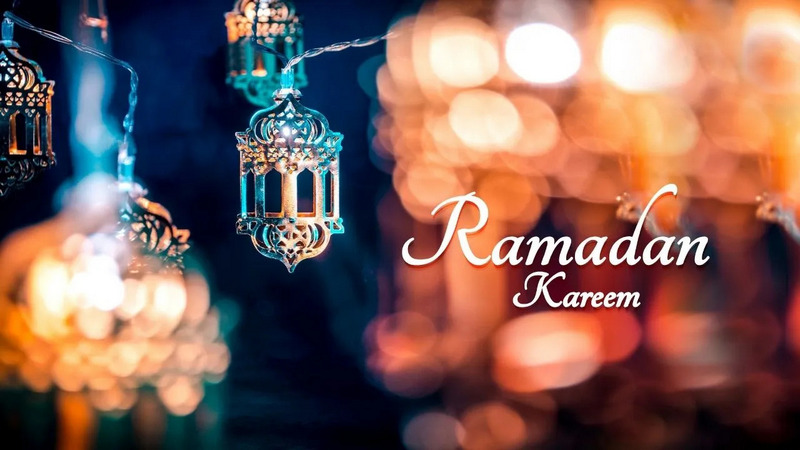
By the way, Ramadan, the sacred month par excellence in Islam, begins this year on Tuesday February 17, 2026, and ends after 29 or 30 days, with the celebration of the festival of Eid-el-fitr, also called Eid-es-seguir.
This year again, and in the context of a world agitated by wars and conflicts, it takes on a very special appearance.
Ramadan offers the annual opportunity to live the special experience of immersion in faith. It is at the same time an exercise of physical fasting, moral purification and spiritual renewal. It is also an exercise in the purification of bodies, through fasting, and in the purification of souls, through ethical combat.
It is also a month with strong historical significance, which takes its place in the memory of Muslims. It is the month of revelation, where the prophet Mohammed, (may salvation be upon him), received the message. Among other things, we celebrate there on the 16th day, the night of revelation, and on the 26th day the night of destiny, etc.
The Ramadan atmosphere
Throughout the month, Muslims fast during the day, from dawn to sunset, and celebrate at night, collectively at the mosque, the prayers called -tarawih-.
It is also the month of compassion and sharing, during which the tradition of -iftar-, or collective meals, is celebrated almost everywhere, primarily to the needy, but also to everyone.
In addition to the religious aspects and its spiritual dimension, Ramadan is a strong landmark in cultural time. It is also a rhythm of life, a culinary flavor, a sensory richness, an inspiring conviviality, etc.
Everyday life aligns with Ramadan time, to punctuate the sequences of daily life. After work time, the markets attract crowds in the afternoon, looking for something to fill the Ramadan table. At sunset, everyone returns to their respective homes at the time of ftour to break the fast, and the streets empty completely. Time to digest, and the streets come back to life, animated by the movement of people heading towards mosques, or family visits, while children transform the streets into places of meeting, play and entertainment. Nightlife inaugurates another sequence of Ramadan life and engages the space in its atmosphere.
It is also an opportunity for the family to savor the delights of the Ramadan table, and to exercise their culinary heels at such times.
As soon as the sunset is announced, by the muezzin’s call to the -maghrib- prayer, or by the firing of a cannon, depending on the region, the whole family gathers around the table, to share the Ramadan supper called -ftour-.
The Ramadan table celebrates, according to the specialty of each region, typical dishes which carry with them the flavor of Ramadan and embody the memory of this sacred month.
Every day, at sunset -maghrib-, the fast is broken with a few dates and a glass of milk. Following a short prayer break, people return to the table again. At the starter, the essential soup -chorba- or -hrira- is a must, accompanied by meat rolls -bourek- or stuffed leaves -brick-. Then comes the turn of a main dish, generally made of meat and vegetables, accompanied depending on the region by rice or pasta. To finish, we enjoy a dessert dish, made of dried fruits and almonds, called -hlou-.
In Quebec, it is in stores with Mediterranean, North African and Oriental flavors that Muslims do their shopping, to honor the Ramadan menu.
In the evening, after breaking the fast, the second part opens, firstly, the celebration of the Tarawih prayer at the mosque, and on returning home, the whole family comes together to enjoy a precious moment of conviviality, around a glass of tea and cakes made for the occasion. It is a precious opportunity for meeting, sharing and conviviality, where children enjoy listening to stories, told with love and affection by the grandmother.
Put to the test of a suffering humanity
In these times, when the world suffers in silence from wars and conflicts, Man must not lack intelligence to intensify gestures of solidarity and altruism. Indeed, in these moments of distress, a great need is felt for help for the most vulnerable, who certainly suffer more than others from the consequences of these ordeals, such as those who live alone, suffering from loneliness, those who lack income, and those, less autonomous, deprived of help, etc.
This is the time to redouble our efforts, to help those most in need, and to strengthen our faith, by reaching out to others.
The end of Ramadan is celebrated with Eid-el-Fitr, or the Feast of Forgiveness. It is a sacred day when everyone takes the opportunity to exchange greetings and forgiveness, and where children rejoice in the moments of celebration and the gifts that are given to them.
Dr Brahim Benyoucef