


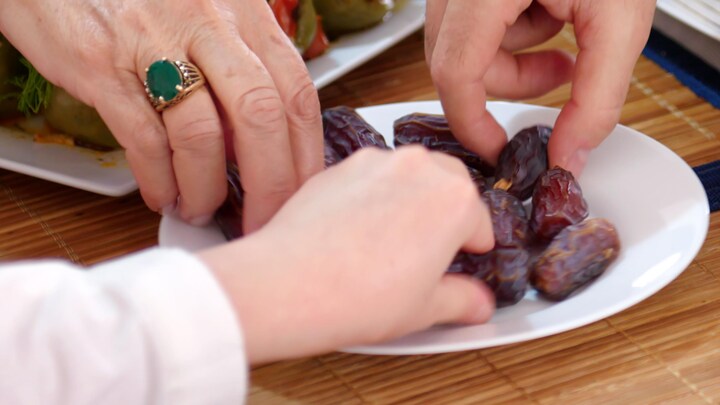
Each year, in Canada, the month of Ramadan takes a unique place in the spiritual, social and cultural life of the Muslim community. Observed by nearly 2 million Muslims in the country, this ninth month of the Islamic calendar is much more than a period of fasting, it represents, in fact, a moment of spirituality, solidarity, celebration and consumption.
The grocery store adapts to exceptional demand
Although Ramadan is primarily a period of abstinence and a spiritual experience, it also generates notable food consumption which stimulates several economic sectors. The daily breaking of the fast at sunset is often associated with large meals, which results in higher food expenditures among Muslims during this month than the rest of the year in Canada. These expenses are estimated at hundreds of millions of Canadian dollars, reflecting the interest of Muslim households in specific and traditional products. This economic windfall attracts the attention of supermarkets and retailers, who are multiplying promotional offers and halal products to capture this marginal demand. In addition, the halal market, fueled by sustained global growth and diversification of available products, represents significant growth potential both nationally and internationally, pushing companies to develop appropriate certification and distribution chains.
Cultural celebrations
In a country as multicultural as Canada, Ramadan is often the subject of celebrations and cultural exchanges. The Government of Canada issues a statement each year to highlight the importance of Ramadan as a time of reflection, generosity and compassion, and reiterates the significant role of Muslim Canadians in society. It is also an opportunity to reiterate the government’s commitment to defending our common values and to fighting Islamophobia and hatred in all its forms.
Beyond a simple religious and spiritual practice, Ramadan also has a social and community dimension. It constitutes a privileged time of solidarity, social cohesion and strengthening of human bonds, marked by an intensification of meetings and conviviality. Intercultural events, such as shared meals organized by various mosques, allow people of all faiths to discover the traditions of the holy month in a spirit of sharing and mutual respect. Having become a tradition in recent years, the national campaign “Fasting with Muslims”, organized by the Ahmadiyya community, offers Canadians the opportunity to symbolically experience a day of fasting or participate in iftar dinners, thus promoting intercultural understanding and interreligious dialogue.
Throughout this month, artistic life comes alive, particularly in Montreal, where a large North African community resides. It is a moment of cultural excitement which gives rise to a rich artistic program. Community centers, associations and event agencies organize after-iftar parties, including concerts, comedy shows, exhibitions and conferences. Ramadan thus becomes a space of transmission, where young people discover the artistic traditions of their parents, and where culture serves as an intergenerational bridge. You can discover the entire Ramadan program on the website of the newspaper L’Initiative, in the “Events and shows” section (linitiative.ca).
Sofiane Idir