


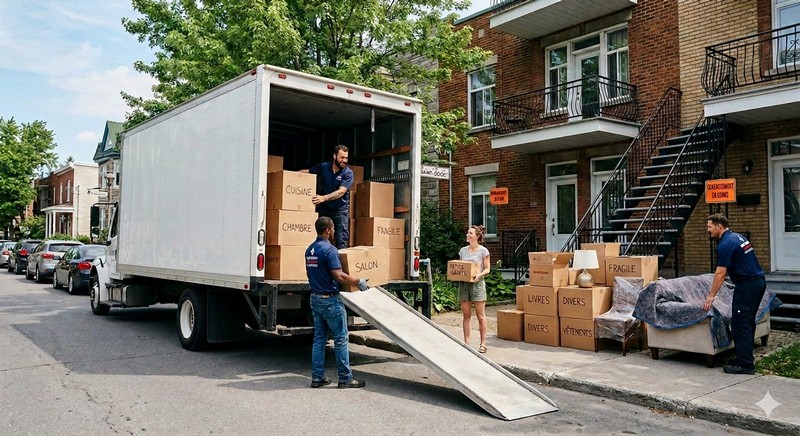
Every year, thousands of people in Quebec move in the spring and summer. July 1st, often referred to as “ Moving day ”, is also one of the busiest days of the year. Between boxes, movers and changes in services, home insurance can easily take a back seat.
However, neglecting your insurance during a move can have real consequences: interruption of coverage, complications in the event of a claim, or insufficient protection. Whether you’re buying your first home or simply changing your address, here are six common mistakes to avoid during moving season.
Forgot to update your address
A move means a new zip code. However, in Quebec, the postal code directly influences the cost ofhome insurance. Insurers calculate your premium based on location factors, such as the crime rate, proximity to fire services, flood risk and claims history in the area.
If you do not update your address, your file may contain inaccurate information. The result: coverage that doesn’t reflect your new reality and, in some cases, complications when making a claim. As soon as your move is confirmed, notify your insurer to ensure that your policy is up to date.
Staying with your current policy without reviewing your options
A move is a good time to take stock of your insurance needs. Your new property may be different from your old one: age, size, materials, reconstruction costs. In short, coverage that suited your last home may not necessarily suit this one.
Automatically transferring your existing policy, without looking elsewhere, can cause you to miss out on better and possibly less expensive protection. In home insurance in Quebec, always compare several quotes, or use an online platform that does it for you. The objective is not just to look at the premium: you also have to compare civil liability limits, reconstruction cost calculations and protection against certain risks, such as water damage.
Leave a gap between two fonts
One of the biggest risks when moving is an interruption in coverage. Home insurance policies often start and end at midnight. So if your old policy ends before your new one comes into effect, even for just a day, you could find yourself without insurance.
Such a void can expose your home to risks like fire, theft or water damage, and leave you shouldering the costs out of pocket.
Before moving day, confirm the effective dates of both policies and make sure the old one ends on the same day the new one begins.
Do not adjust your coverage after improvements or new features
A move often means a different property, and sometimes more “equipped” than the previous one. A finished basement, detached garage or renovated kitchen can drive up rebuilding costs. Even work carried out by the previous owners can change the value to be insured.
Now is also the time to check your belongings. Valuable items, such as jewelry, artwork or sports equipment, sometimes exceed the limits provided in a standard policy and require endorsements. Take advantage of the move to take an inventory and ensure that your coverage amounts correspond to the reality of your new home and its contents.
Underestimating seasonal risks linked to weather in Quebec
Quebec winters can cause significant damage: ice, heavy snow and long periods of frost. In spring, rapid snowmelt and sustained rain also increase the risk of flooding and sewer backups, especially in certain areas.
In short, moving is a good opportunity to check that your insurance adequately covers weather-related damage. Protection against runoff flooding (surface water), sewer backup, and other forms of water damage are often optional. Refusing them, however, can expose you financially to some of the most frequent losses in Quebec.
Missing out on discounts you may be eligible for
By changing your address, your eligibility for certain discounts may also change. If your new home has a security system, upgraded plumbing or electrical wiring, or features like a backwater valve, you could save money.
This is also a good time to look at the consolidation of insurance (home and auto). Consolidating your policies can simplify day-to-day management and reduce the total cost with a discount.