


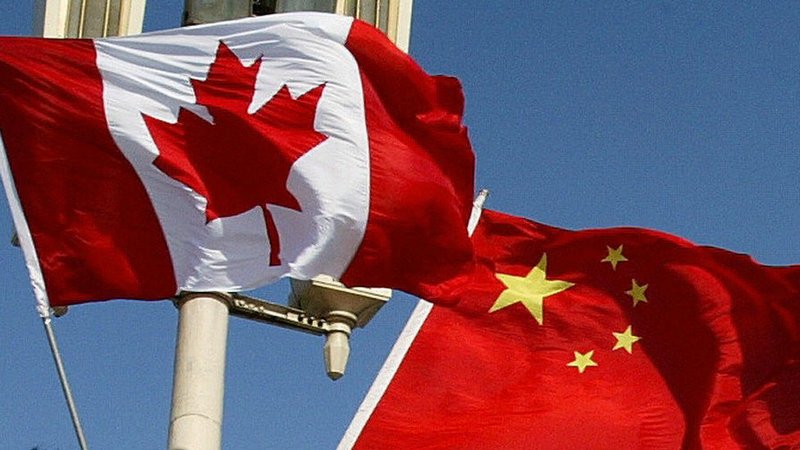
In an international context marked by geopolitical tensions, changes in trade flows (fragmentation of trade) and economic uncertainty, Canada is beginning a strategic shift by directing its trade towards partners deemed more secure. It is in this perspective of geopolitical reconfiguration of exchanges that the visit of Prime Minister Mark Carney to Beijing in January falls, the first of a Canadian head of government to China since 2017, and the launch of a new strategic partnership between Ottawa and Beijing. At the end of this visit, the two countries published a joint declaration defining the main pillars of this new bilateral relationship, focused on the economy, energy, climate, global governance and public security.
A new impetus for trade and investment between the two countries
At the heart of this partnership is cooperation in the energy and clean technology sectors. Canada and China, both major energy players, want to combine their efforts to reduce greenhouse gas emissions and stimulate investments in batteries, solar and wind energy as well as energy storage. During his stay, Mark Carney met with several Chinese business leaders to accelerate potential investments in Canada, particularly in joint ventures deemed strategic.
A particularly sensitive area concerns the electric vehicle sector. Ottawa will authorize the import of 49,000 electric vehicles manufactured in China, subject to a preferential tariff of 6.1%, corresponding to volumes observed before recent trade tensions. The government assures that these imports will represent less than 3% of the Canadian market and that they should, in the medium term, promote job creation thanks to Chinese investments in automobile manufacturing in Canada. Within five years, more than half of these vehicles are expected to be priced below $35,000, addressing growing concerns about the accessibility of electric vehicles for Canadians.
However, agri-food remains the cornerstone of the Sino-Canadian relationship. China is Canada’s second largest export market, particularly for agricultural and seafood products. A preliminary trade agreement provides for a major reduction in tariffs on Canadian canola, from around 85% to 15% by March 2026, according to the Office of the Prime Minister of Canada. This measure, combined with the reduction of barriers on canola meal, lobster, crab and peas, could generate nearly $3 billion in new export orders.
The partnership is not limited to the economy. Canada and China intend to strengthen their cooperation in global governance, financial stability and the fight against climate change. Increased collaborations are also planned in the areas of public security, the fight against transnational crime and cybercrime.
Finally, the human and cultural dimension is not left out. The two countries wish to stimulate cultural and tourism exchanges, in particular through a visa exemption for Canadians traveling to China and joint initiatives in preparation for the 2026 FIFA World Cup.
A strategic repositioning in the face of the fragmentation of international trade
Presented by Ottawa as a “turning point” in bilateral relations, this new strategic partnership demonstrates a pragmatism that seeks not only to seize commercial opportunities and investments, but also to adapt to a fragmented global economy where economic blocs are redefining themselves according to strategic and political interests rather than strictly economic ones. In a context where persistent tensions between the United States and China, illustrated by high customs duties and protectionist measures, have forced Ottawa to diversify its trade beyond its traditional North American partner, the United States, in order to reduce its vulnerability to the instability of American trade relations.
Sofiane Idir