


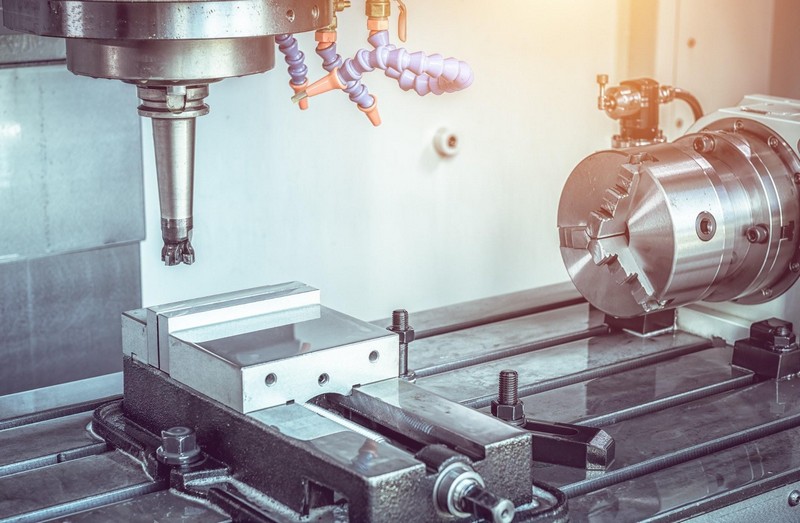
Entrusting the manufacturing of mechanical parts to a subcontractor is never a trivial choice. A bad machining partner can delay an entire production line or compromise the quality of an entire assembly. Here are the concrete criteria to check before signing with an industrial machine shop.
What are the criteria for choosing the right machine shop?
Before entrusting a project to a subcontractor, check their real ability to work with materials specific to your sector. Hardened steels, aluminum, stainless steel or technical plastics each require different tools and know-how. And a workshop that is good at one material will not necessarily be as successful with another. To evaluate this type of partner, HARtech which has been an active Montreal workshop since 2011, clearly illustrates the criteria to look for:
modern equipment;
qualified personnel capable of managing both small series and complex parts;
and sectoral versatility that covers aerospace, automotive, electronics and manufacturing.
This ability to adapt to very different sectors often demonstrates real technical maturity. Furthermore, a good workshop must also demonstrate rigorous quality control at every stage of the process. Ask how tolerances are checked during production. This greatly reduces the risk of discovering a defect too late in your own assembly line.
What machining processes should you know before launching a project?
Turning produces circular shapes, shafts, rings, axes, with tight tolerances suitable for the most demanding industrial environments. This process remains the basis of many cylindrical mechanical parts used in industrial assembly.
Milling works flat surfaces or complex geometries in two or three dimensions. It is a central process for the manufacture of tailor-made mechanical components that cannot be obtained by simple turning. As for drilling, it creates calibrated holes intended for assembly systems. These may be machines, electronic boxes or specific tools.
Finally, boring and grinding optimize the final dimensions to ensure perfect fits and exacting tolerances. It is a finishing step that is often decisive for the overall quality of a mechanical part. If you understand these processes, even if only briefly, you can better communicate with your supplier about the real constraints of your part.
Why choose a local partner?
Work with a industrial machining service located near your site has several advantages. For example, this reduces delivery times and facilitates technical exchanges during the project.
This proximity also becomes particularly valuable during urgent repairs which cannot wait several weeks for transport from a distant supplier. A broken mechanical part on an active production line represents a downtime cost that mounts quickly. And the ability of a local partner to respond quickly can make a significant difference to your operational profitability.