


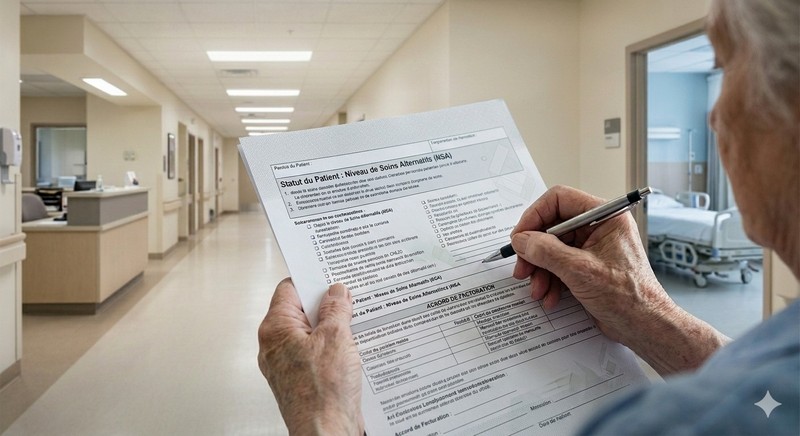
When a hospitalized patient is deemed “fit” to leave the hospital but their condition requires accommodation in a long-term care center (CHSLD), a transition period begins. This process, although regulated, sometimes reserves significant financial surprises for families.
The status of “alternative level of care patient” (NSA)
As soon as the medical team declares that a patient’s condition is stable, they are no longer considered to require acute care. If he cannot return home and must wait for a place in accommodation, the hospital then begins to bill the accommodation costs, as if he were already in a CHSLD.
The lack of transparency denounced
Several families report a lack of clarity when signing administrative forms:
Complexity of documents: Information relating to accommodation costs is often located on the second page or in poorly highlighted boxes, while the attention of relatives is focused on the choice of establishments.
Insufficient verbal communication: Social workers emphasize the placement criteria, but sometimes fail to specify that billing begins immediately at the hospital as soon as the patient is classified “stable”.
High costs for loved ones
Fees can run into several thousand dollars. For families, this situation is perceived as a form of “hidden costs”, especially since the care provided in hospital is no longer always adapted to the specific needs of patients losing their autonomy.
The challenges of the system
This situation raises two major problems:
Hospital pressure: Managers face a shortage of beds and must free up places for urgent cases, creating tension between the administration and families.
Support for caregivers: The lack of resources at home often forces the transition to CHSLD, an emotionally heavy transition where the financial burden becomes an additional stress.
Carole Dumont