


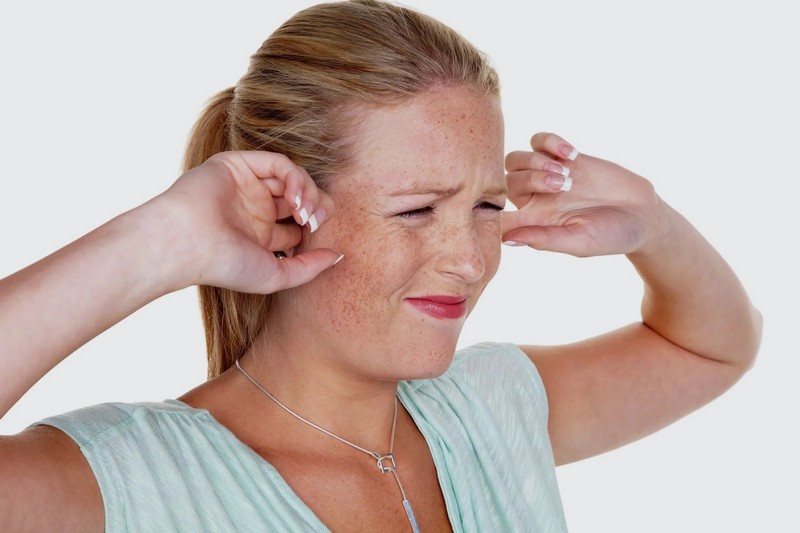
Tinnitus is noise (hissing, buzzing, crackling, etc.) that you hear in one ear (or both) or in your head without being emitted by a source from the outside world. These are therefore perceptions of sounds or auditory sensations which are not caused by external noise. Their symptoms are often linked to acoustic trauma or aging of the ear.
The perceived sound differs from person to person and may sound like a buzzing, hissing, squeaking, ringing, hissing, whirring, chirping, clicking, etc. The noise heard occurs either suddenly during an event (loud concert, episode of stress, etc.), or gradually, and is constant or intermittent. It can be more intense in certain circumstances (fatigue, stress, change in head position, etc.) or at certain times (in the evening for example). It is felt in one or both ears and sometimes in the head at the top of the skull.
Tinnitus may be accompanied by decreased hearing or hyperacusis (excessive sensitivity to sounds and noise).
What if certain foods like coffee and salt could also trigger or amplify tinnitus? According to a publication by the specialized platform Hearing Health & Technology Matters (HHTM) in February 2026, it is not scientifically proven that these foods systematically worsen tinnitus. However, they can act as an individual trigger for some people. The American Tinnitus Association (ATA) has also published content along the same lines.
“People with tinnitus are often advised to avoid caffeine and reduce their salt intake, as if these substances directly make their tinnitus worse. Many patients give up coffee, adopt a low-salt diet, and carefully monitor every bite and sip, only to find that their tinnitus seems unchanged. « , said Jennifer J. Gans, a renowned clinical psychologist specializing in the management of tinnitus in San Francisco (United States).
When it comes to salt, there is sometimes talk of an indirect link. In some people, salt can increase blood pressure and cause fluid retention, potentially affecting fluid pressure in the inner ear. However, the majority of studies have shown that for the majority of people, there is no question of a triggering effect or significant impact on the overall perception of tinnitus. It should be noted, however, that in patients affected by Ménière’s disease, a diet low in salt can help stabilize symptoms, including tinnitus.
Note that Ménière’s disease is a chronic disorder of the inner ear characterized by attacks of dizziness, tinnitus and progressive hearing loss. Ménière’s disease affects the inner ear and manifests as sudden attacks of rotating dizziness, often accompanied by nausea, vomiting, tinnitus (ringing or noises in the ear) and a feeling of fullness or pressure in the affected ear. Hearing loss is usually one-sided at first and may get progressively worse over time.
When it comes to coffee, this is more of a persistent myth. Contrary to popular belief, the vast majority of studies carried out on the subject support an absence of a direct link between caffeine and the triggering or worsening of tinnitus. On the contrary, some work has concluded that regular coffee consumption could reduce the risk of developing tinnitus in certain populations, mainly women. On the other hand, in people who already have the condition, suddenly stopping coffee can cause stress, anxiety and migraines which could make the tinnitus more noticeable.
Concerning stress, if the latter is the cause or aggravating factor of tinnitus? Note that tinnitus is in most cases difficult to identify. Sometimes they are due to an imbalance in the nervous system. Stress then contributes to the occurrence of temporary or lasting ringing in the ears. A psychological or emotional shock, such as a death, can also promote the presence of tinnitus.
However, it is not scientifically proven that some tinnitus is caused by it. However, people with tinnitus often report the close correlation between tinnitus and increased anxiety and irritability. This link is even stronger in patients suffering from hearing loss.
Although the origin of the manifestation of tinnitus is difficult to establish, a certain worsening is observed during periods of stress. In an anxiety-provoking context, tinnitus attacks and the intensity of ringing and whistling noises can be more debilitating.
Finally, remember that for the moment, there is no miracle cure for tinnitus. Only certain tips and means can alleviate them. Let us first mention the ability of the brain itself to ignore noise, just as it is possible to forget the ticking of a clock or even sound therapies consisting of using “white noise” (rain, wind) to mask tinnitus. However, recent research suggesting a natural “button off” has visibly given hope to those most affected.
Among the many natural solutions that relieve tinnitus, bananas would be a good complement to medical treatment provided by an ENT doctor. It is also a food that can play a role in the proper functioning of the hearing and nervous system, and your health in general.
Mohand Lyazid Chibout (Iris)