


We all know that shoebox that overflows, that drawer that gets stuck or that pile of papers that taunts us on the corner of the counter. However, undertaking an administrative “detox” is not just a question of tidying up: it is offering yourself a real mental liberation, because physical disorder increases the level of cortisol, the stress hormone. By putting away your papers, you are not only cleaning, you are taking care of your mental health!
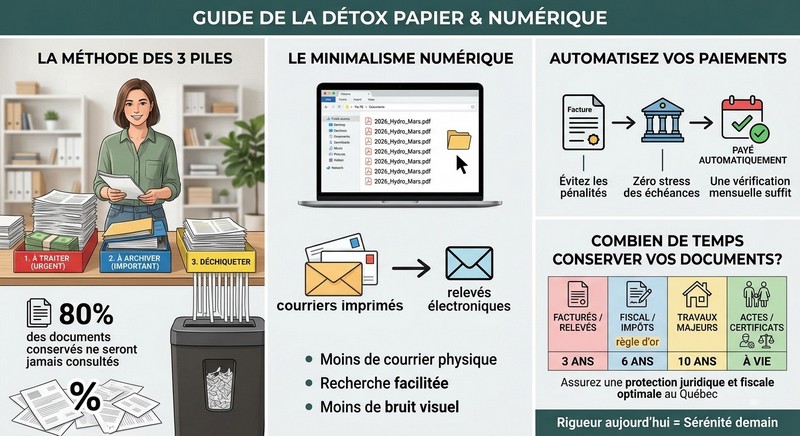
The 3 batteries method
To get started, empty everything onto a table and divide documents into three categories: To process (urgent), To archive (important), and To shred. Be ruthless: around 80% of stored documents will never be accessed again.
Digital minimalism
Stop the invasion at the source by switching to electronic statements. For your digital files, adopt a clear nomenclature (eg: 2026_Hydro_Mars.pdf). Less physical mail means less visual noise and easier searching come tax time.
Automate to stop thinking about it
The pinnacle of detox is autonomy. Automate your recurring payments. It’s the best remedy for late payment penalties and the stress of forgotten deadlines. Once the system is in place, your only task will be to check your accounts once a month.
How long should you keep your documents?
To succeed in your sorting without fear, here are the legal retention periods in Quebec:
3 years: Electricity, telecommunications bills and your credit card statements (for proof of payment).
6 years: This is the golden rule for everything related to tax (assessment notices, receipts, proof of income). The period begins after the end of the tax year in question.
10 years: Documents related to major work on your property.
For life: Notarial deeds, court judgments, family records and birth certificates.
By respecting these retention periods and structuring your archiving, you ensure optimal legal and tax protection. Rigorous management today is your best guarantee against the unforeseen events of tomorrow.
Martine Dallaire, B.B.A.