


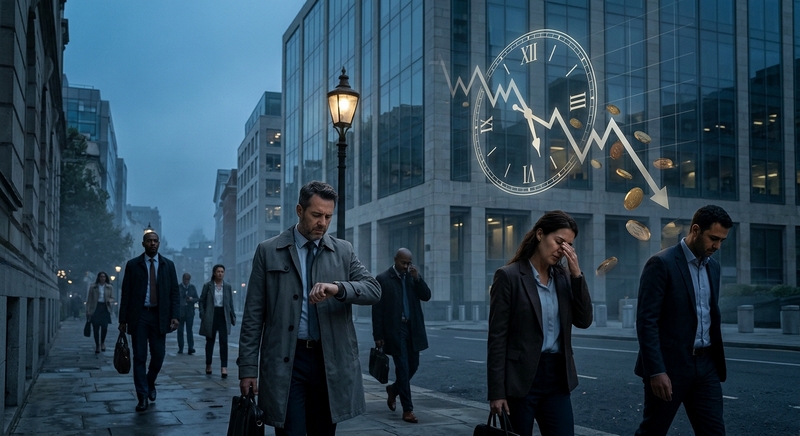
Every fall, the return to Eastern Standard Time comes with a tempting promise: an extra hour of sleep. However, behind this fleeting gain lies a much darker financial reality. Originally introduced to save energy by coupling our activities with daylight, the time change has become, over the course of technological innovations, an anachronism which generates major systemic costs for society.
A tradition from another era
Today, the historical argument for energy efficiency no longer holds up. With the widespread use of LED lighting and smart devices, the impact on electricity consumption has become less than 1%. On the contrary, some studies suggest that increased heating needs during darker evenings cancel out morning gains.
Big bill for productivity and finance
The real economic repercussions are measured mainly on the labor market. The disruption of the circadian rhythm causes an immediate drop in productivity. The fatigue accumulated during the week following the time change leads to a measurable increase in work accidents and road collisions, increasing public health expenses and compensation costs for businesses.
Even more surprising, this discrepancy is shaking the financial markets. Research published in theAmerican Economic Review reveal that the stock markets show historic underperformance on the Monday following the time change. In the United States, this represents volatility and losses estimated at billions of dollars in a single day, with anxiety and lack of sleep prompting investors to be excessively cautious.
Local businesses plunged into darkness
The retail, hotel and catering sector is also suffering from this hasty darkness. When the sun sets before the end of office hours, consumers adopt withdrawal behavior: they go straight home, abandoning terraces, outdoor recreational activities and commercial streets. This direct shortfall for the local economy is one of the reasons why the business community is increasingly campaigning for stability.
Towards the end of an obsolete tradition in Quebec
The discontent is no longer just economic, it is political. Following a vast public consultation led by the provincial government, an overwhelming consensus emerged: 91% of Quebecers want this biannual practice to be abolished. Among them, a large majority (72%) favor maintaining permanent summer time to preserve light at the end of the day.
While British Columbia is preparing to take the plunge and Ontario has already passed a law to this effect (pending coordination with the State of New York), Quebec is stepping up its thinking. The government is seriously evaluating the end of this tradition. The modern economy no longer needs to manipulate time to function; it requires stability, predictability and light.
Martine Dallaire, B.B.A.