


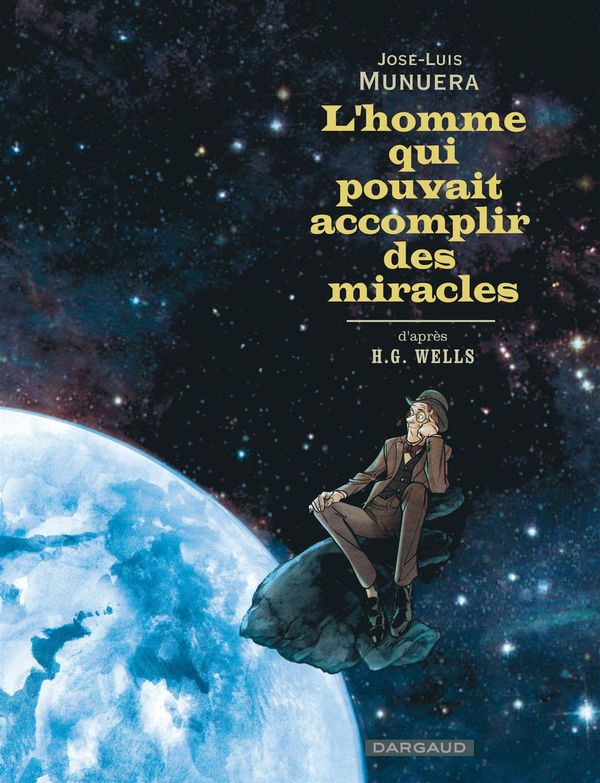
 The man who could perform miracles[1] is a short story that was published in 1898 by the English writer HG Wells (1866-1946). This was adapted into a feature film in 1937 and was translated into several languages before being revisited in the form of a graphic novel by José Luis Munuera.
After publishing Zorglub, Its smell after the rain And Mercy, the Spanish author and designer this time publishes a work that can be interpreted from a philosophical point of view.
George McWhirther Fotheringay, who defines himself as an ordinary man, is convinced that miracles do not exist…but he is miraculously gifted with the ability to accomplish them.
But rather than change the world, he settles for small, insignificant miracles…until a fit of anger leads him to send a police officer to hell – literally.
Unbelievable that he possesses all these powers, he seeks answers from a medium, a doctor, a psychiatrist and a pastor who had excessive ambition. This man of the church tries to manipulate Fotheringay who in turn realizes that his wishes could cause disaster.
The Man Who Could Perform Miracles allows us to discover a story which presents itself as a parable on the limits of human knowledge as the waiter at the pub The Long Dragon points out:
“Nature is well done. Imagine that an individual truly has the gift of doing whatever he wants. What if someone was stupid and wanted stupid things? Worse yet, what if he was just ignorant, mean, or both? He would have absolute power to do absolutely whatever he wants! Declaring wars, oppressing your fellow human beings, imposing your ideas and beliefs, annihilating everything we know… No Fotheringay is right, no one can perform miracles. And that, my friends, is the real miracle” (p. 65)
Reda Benkoula
[1] The man who could perform miracles | Jose Luis Munuera (Scenario, Drawing), Sedyas (Colors) | Dargaud | 2025 | 72 pages